
Creating Climate-Controlled Display Spaces for Wine Storage
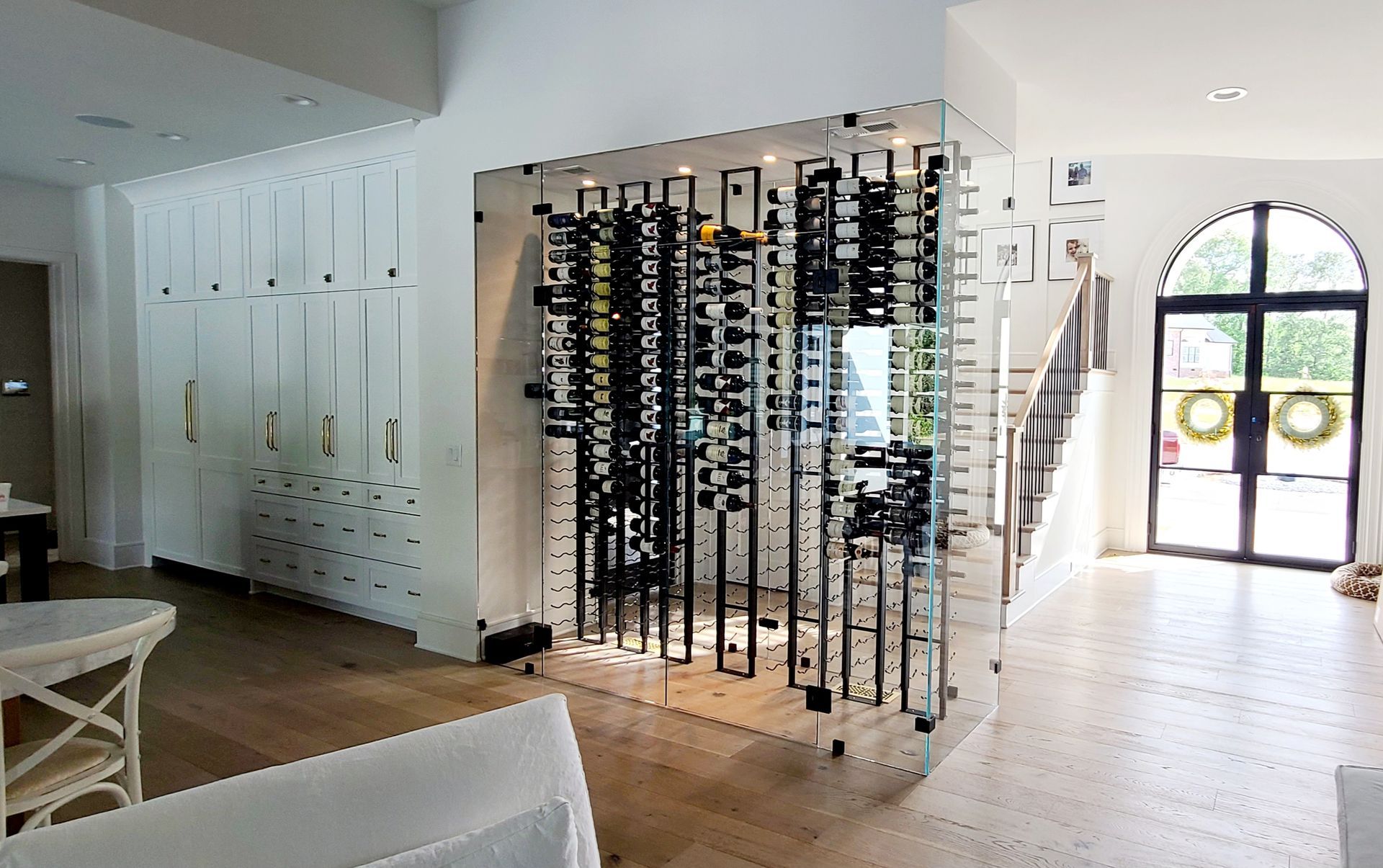
Wine Room Glass Enclosures in Greenville for residential wine cellars requiring visible storage with sealed temperature control
Palmetto Specialties designs and installs wine room glass enclosures that create a visually open storage space while maintaining the sealed environment needed for climate control systems to function properly. You receive frameless or framed glass walls and doors that allow full visibility into the wine room from adjacent dining areas, kitchens, or living spaces without compromising the insulation and air barrier required to keep temperatures stable. Each enclosure is built around your wine room's dimensions, racking layout, and cooling unit placement.
This service addresses the challenge of showcasing wine collections without exposing bottles to temperature swings, light degradation, or humidity loss. Glass enclosures replace solid walls or opaque doors, turning wine storage into a design feature while still allowing cooling systems to maintain consistent conditions. The result is a room that functions as both a working cellar and a display element, with tempered glass panels that handle the condensation and thermal stress that occur when cold interior air meets warmer exterior conditions.
If you're building a wine room or converting existing space into climate-controlled storage, schedule a consultation to review glass specifications, door hardware, and sealing methods that work with your cooling equipment.
Why Glass Wine Rooms Require Different Construction Than Standard Enclosures
Your wine room enclosure uses insulated glass or dual-pane systems to reduce heat transfer between the cooled interior and the surrounding room, preventing your cooling unit from running continuously or failing to reach target temperatures. Door sweeps and weatherstripping seal all gaps where conditioned air could escape, and hinges are mounted with thermal breaks to avoid cold bridging through metal hardware. This level of sealing is unnecessary in standard shower or partition glass but critical when the glass separates environments with significant temperature differences.
After installation, you'll notice that the wine room remains visible from outside, the glass stays clear without constant condensation buildup, and the cooling system cycles normally rather than struggling to maintain setpoint. Palmetto Specialties coordinates glass specifications with your HVAC contractor or wine room builder to ensure the enclosure supports the room's thermal performance. You avoid the common mistake of installing single-pane glass that sweats heavily, allows heat infiltration, or forces the cooling unit to overwork.
Glass options include clear tempered panels for maximum visibility, low-iron glass to eliminate green tint, and frosted or textured sections for partial privacy. Frameless enclosures use minimal hardware and rely on precise glass sizing to maintain air seals, while framed systems incorporate aluminum or wood borders that simplify weatherstripping and provide structural support for larger openings. Doors may swing, slide, or use pivot hardware depending on available clearance and traffic flow.
Homeowners ask about insulation values, condensation management, and whether glass enclosures affect cooling system sizing.
Questions About Wine Room Glass and Climate Control
What type of glass is best for wine rooms?
Dual-pane insulated glass with a low-E coating reduces heat transfer and minimizes condensation, while single-pane tempered glass is acceptable in smaller rooms with less extreme temperature differences.
How do you prevent condensation from forming on the glass?
Proper insulation, adequate cooling capacity, and sealing all air leaks reduce the temperature differential that causes condensation, though some fogging may still occur during high-humidity months in Greenville.
When should a wine room use a framed enclosure instead of frameless glass?
Framed systems provide better thermal performance and easier weatherstripping for rooms with aggressive cooling setpoints, while frameless designs work well in smaller rooms or when minimal hardware is preferred.
Why does glass affect wine room cooling system sizing?
Glass conducts more heat than insulated walls, so larger glass areas may require a slightly larger cooling unit to compensate for the additional thermal load.
How long does it take to install a wine room glass enclosure?
Most installations are completed in one day once the wine room framing, insulation, and cooling system are in place, though custom curved or multi-panel designs may take longer.
Palmetto Specialties works with your wine room contractor to schedule glass installation after the cooling unit is operational and the room has been tested for air leaks. Contact us during the planning phase to review glass options and ensure your design accommodates the necessary sealing and insulation details.